jreg's video is good and he isn't wrong, but I think that with artists especially there's a kind of selection effect going on that makes the analysis less useful than it would seem. An artist gets called such likely because they have facet extremes rather than domain extremes, and because such extremes combine in interesting and rare ways, it makes the domain analysis particularly uninformative for them. Let me use myself as an example:
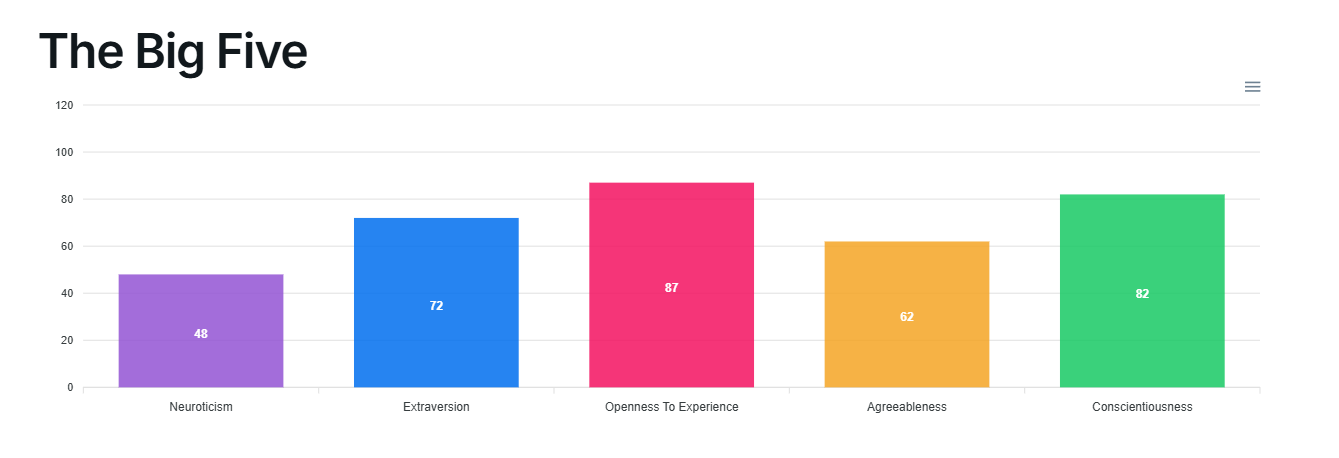
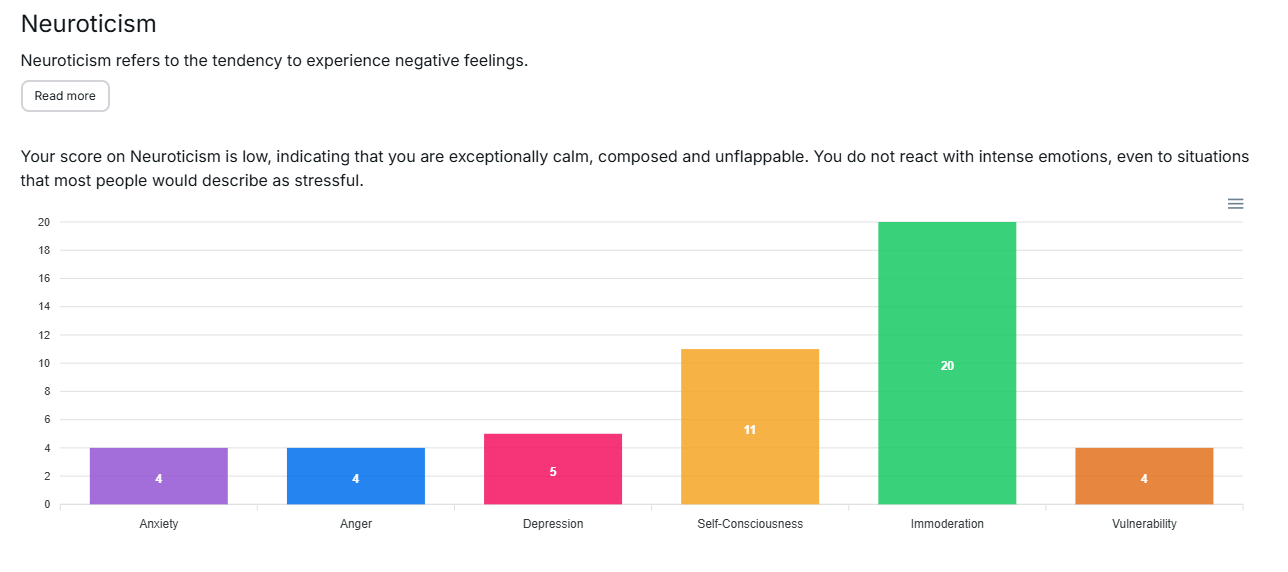
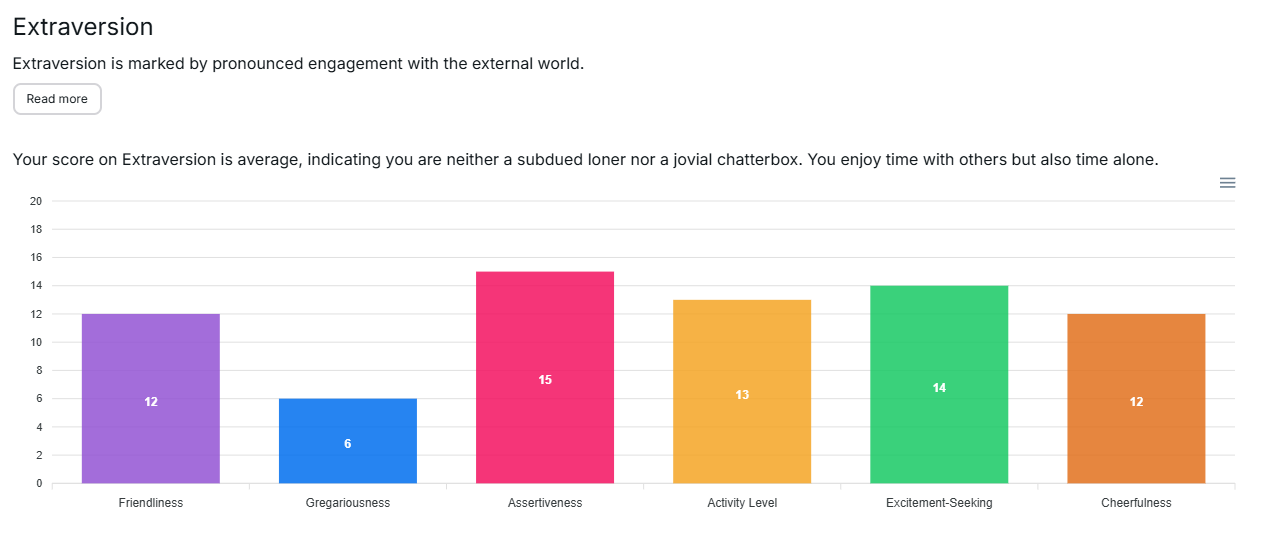
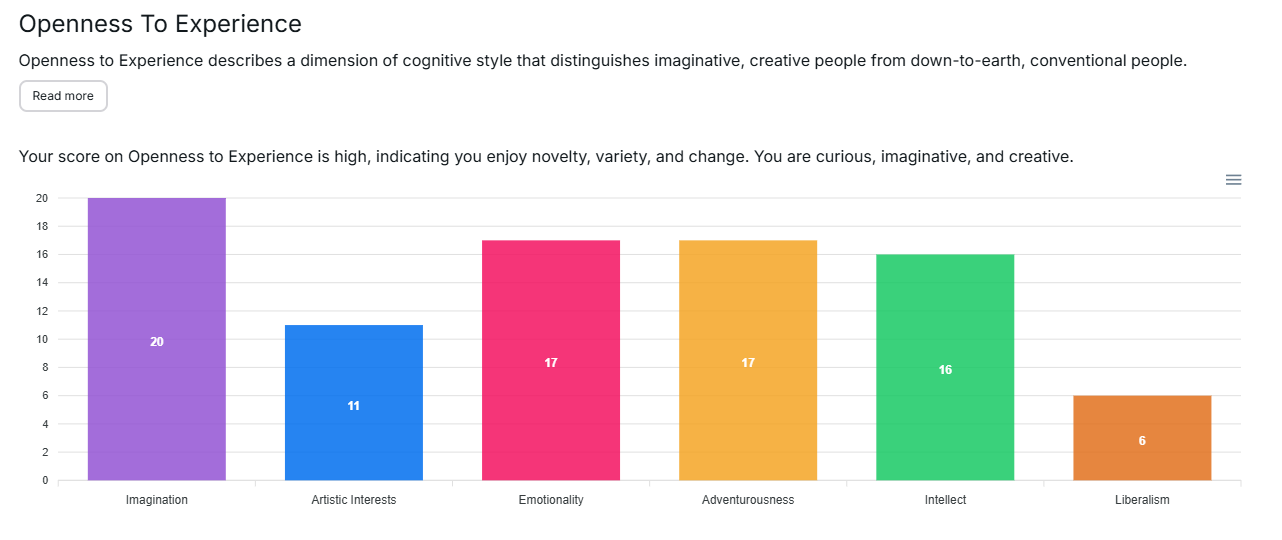
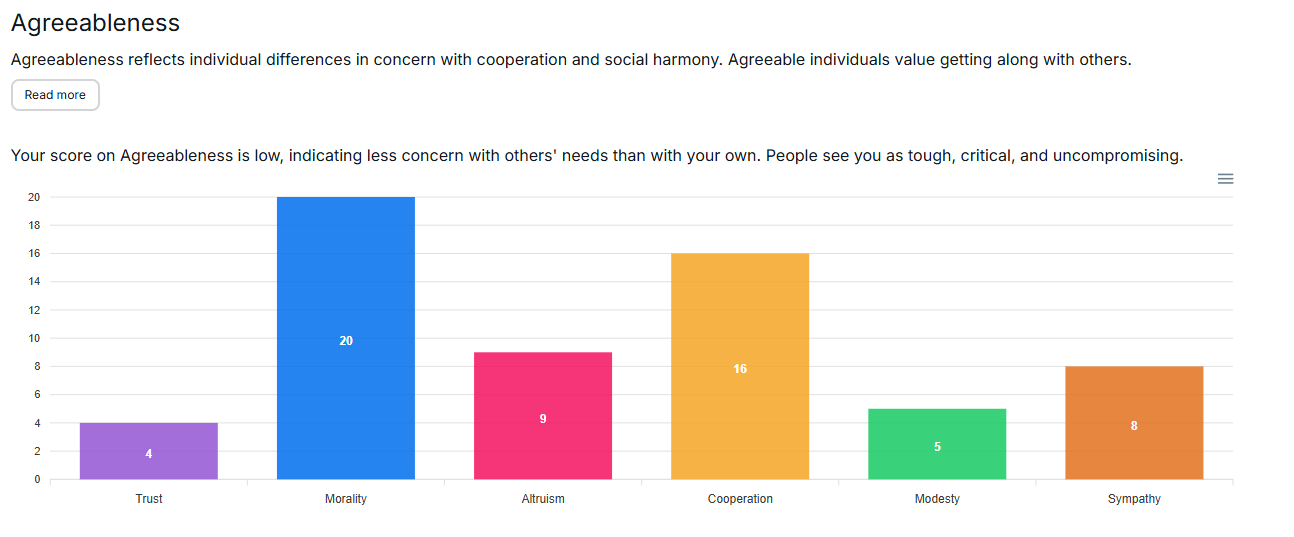
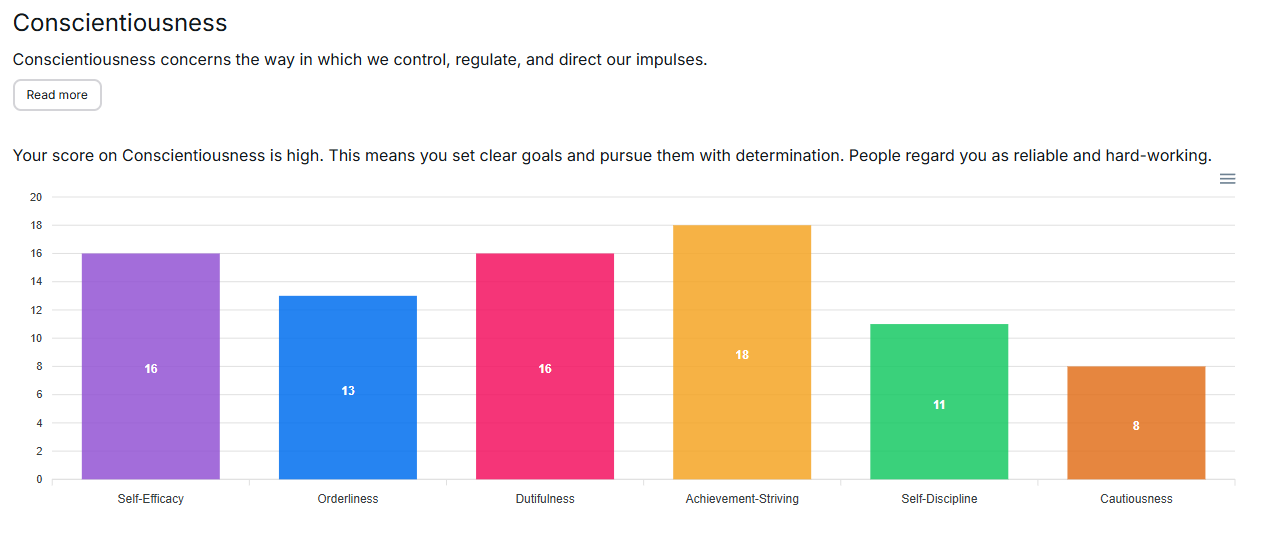
These are my big five results. I'm very creative, I both feel that way, and there's also some evidence in the universe, however faint, pointing in that direction. If you were to go by the domains alone, you'd think this is because I'm high in openness, that's where jreg places new unique ideas, innovation and so on. And that's partly true, but I'm fairly certain my creativity comes primarily from the specific combo of high imagination, high immoderation, low cautiousness, and secondarily from generally low agreeableness.
To be creative is to make uncommon connections between disparate things, to have a lateral mind as jreg puts it, and to have this kind of mind you need to think in an intuitive manner, to not think in terms of existing orders, this goes back to the quote about schizophrenics I posted a few days ago here too, to be intellectually impulsive, essentially, and to do that it helps to have high immoderation and low cautiousness, so you can make the connections and then just run with them carelessly to see where they go, without preemptively shutting them down.
Imagine someone who has exactly my stats, except high cautiousness, or high self-consciousness, or even something like high modesty. Those people would be less likely to follow through on the ideas they have, either because the idea is initially malformed and doesn't have potential, so the high cautious mindset discards it; or because they would bring the other into it, what would other people think of the idea, how would it reflect on me, would this make me a so-and-so artist or a this-or-that artist; or because they don't believe that they could come up with such an idea, there's no way the idea they have could be good and unique, because other people would have thought of it before.
Imagine a high cautiousness and low immoderation version of me. I think this version could still be creative, but they would likely reach their ideas in slightly different ways. I've mentioned John Cleese's book before:
In his book, John Cleese also mentions that one of the things he does for generating new ideas is sitting down and just mechanically writing down ideas, no matter how good or bad they are. Many comedians mention doing this as well.
I know for a fact that this will never work for me. I've never done it, but I simply know it won't work. It's just not how I get ideas. I get ideas when I'm walking around my room listening to music, when I'm in the shower, when I'm doing the dishes, when I'm walking outside, basically whenever my mind is wondering sometimes BAM!, a good idea hits me. I also get a lot of good ideas from dreams. This is how I work. So this idea doesn't work for me, does that mean John Cleese is wrong?
No! It simply means that that particular avenue doesn't work for me and for people who are wired like me. It might be that for other people who are more disciplined and/or orderly, the list generation method may work better than anything else, and that's how they get their ideas.
It's possible that for someone who is not as impulsive and instinctive, but who is otherwise the same, this would be a method that works for them. But it does not at all work for me. So these very small facet differences that don't really change the domain (this imagined version of me would still read as low neuroticism and high conscientiousness) will still result in these pretty large differences in how one approaches their art.
The point being, jreg's analysis is good and useful and mostly right, but it's important to know exactly what kind of person you are so the details of what actually drives you are not lost in noisy generalities. This is functionally the same criticism I had of the other jreg video I posted in Lv.99 Lich, which is that he has an argument in the right direction but lacking some specificity that matters. I assume he handles the specificity well on a case by case basis (from what I gather it seems he coaches other artists), but if you're just a random watching these videos it can be easy to miss these things, especially if you're younger and your personality isn't fully formed yet.
I've mentioned this before, but I'd say that the usefulness of such personality tests is lower than I believed them to be in the past. But they're not totally useless. For instance, my high immoderation is very extremely true and real. I don't drink, as the few times I've drunk before, I got so drunk I passed out, and I've never done drugs, and I never will do them, because I know for a fact that if I do them I'll get addicted and it'll ruin my life. I just have an obsessive type of personality. This is bad when it manifests itself in overeating or sex, but it's good when it manifests itself in creativity, or even in the alignment point I made in the previous post. It's not unreasonable to think that alignment beats discipline so thoroughly for me because resisting present drives is nearly impossible, but when a drive is present I can't not act on it, thus making the aligned action effortless.